Total Pageviews

Showing posts with label live food. Show all posts

Monday, April 9, 2018

Budding wolffia. #wolffia #wolffiacolumbiana #lifefishfood


Sunday, April 1, 2018

Collecting a little native wolffia from a Pond. It’s the world’s smallest flowering plant. 50% protein by wet weight. Excellent live fish food. Very cool little purple springtails on the water. #wolffia #livefishfood #goldfishbreeder #goldfishkeepers #goldfishunion


via IFTTT

Sunday, August 28, 2016

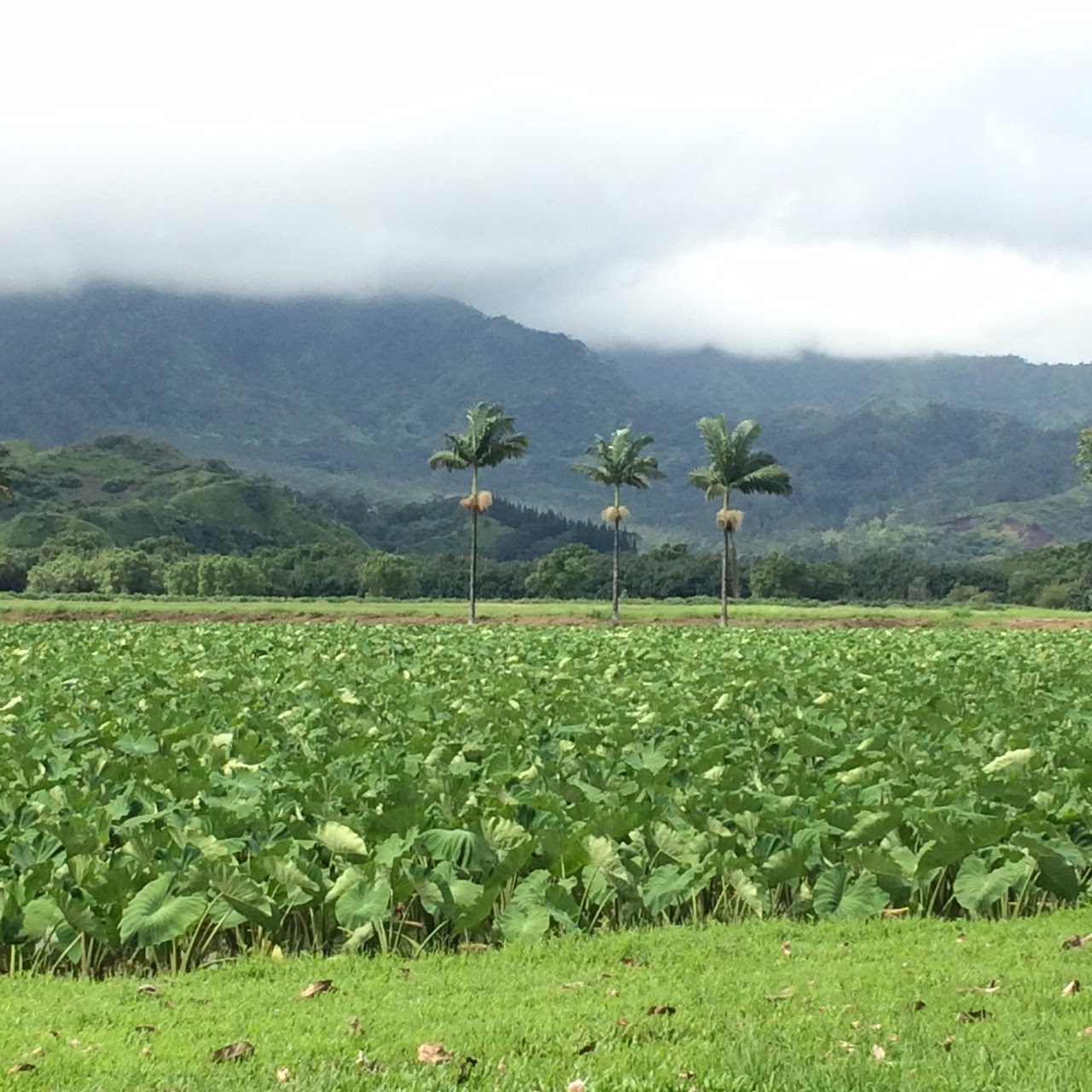
Wolffia from Hanalei Taro field


Went on a Taro tour in Hanalei Kauai and when they handed me an example of a harvested plant I immediate recognized the stem had little green spots which were wolffia, the smallest duck weed. I scrapped a few dozen up with some fibers from the taro and wrapped them in a large leaf. Later, I mixed up the mush and isolated a few dozen plants, washed them and packed them up for the trip home. They seem to have down well and look like they're dividing so hopefully soon I'll have a niece little culture of the Hanalei Taro Wolffia!

Ironically, I was about to order some and decided to wait until after the trip.

Sunday, April 17, 2016

Daphnia season is in full swing

Harvested a handful of daphnia today. The special fish are well today.


Saturday, May 3, 2014

Chironomid (bloodworm) egg mass


A possible candidate. 

Thursday, May 1, 2014

Brine shrimp rack

This is an old friend I've pull out of the bone yard to help keep up with the current brine shrimp demand. I'll also keep a few moina cultures going. 

I built this in 2001 at work for an experiment culturing moina. It was designed around  the 1.25 liter crystal geyser brand of soda water bottle. When cut they hold a liter of water.  I typically hatch at 1 liter water, one tablespoon (5ml) and one tablespoon (5ml) salt.  During the cold times of the year, they are run on a 48 hour cycle, with a first small flush of nauplii at 24 hours, given to the smallest of fry, then by 48 hours a large harvest of shrimp is collected.  Today we had a 89 F degree day and the shrimp will likely be on a 24 hour cycle and less density.

It is made with one inch and half inch pvc, friction fit together. 

A separate air manifold is zip tied to the back.

There are 8 positions, giving lots of options.

The cap and neck of the inverted bottle fit nicely into the one inch tee at the bottom.  

Plastic air valves are critical this close to salt.

To fit the available space, it was impossible to lift the cones out of the top, so the front top rail and supports were removed for front loading.

The fit is good enough to not need the side bars.  This rack can be made simply with a row of one inch tees pointing up and one perpendicular at each end to keep the rack upright.

A second harvest at 48 hrs.

I make my own soda water in a 5 gallon cornilius keg so it's novel to buy bottles.

A bottle with exactly 1 liter of water.

As filled with a graduated cylinder. 

Thursday, September 5, 2013

Brine shrimp free nursery

These are two week old (one week post hatch) Wakin import fry, spawned, incubated and nurtured in greenwater with daphnia. 

No brine shrimp were used.

Monday, July 29, 2013

Artemia Decapsulation

MATERIALS

Artemia Decapsulation

15 oz can of dried Artemia cysts (approximately 430 g) 4.3 L ~6% laundry grade bleach, chilled to 4oC
1.25 kg Rock Salt (NaCl)
125 ml 40% Lye (NaOH) solution (w/v)

30.0 g Sodium thiosulfate (Na2S2O3)
16 L Hatching Cone with aeration
125 um mesh bag (Aquatic Eco-Systems PMB3, 125 micron x 18") Several 3-5 L beakers
(1-2) Squirt bottles - squeeze type


SOLUTIONS


*Solutions should be prepared in advance - these need to be chilled to 4oC prior to use.
*Bleach, ~6% laundry grade
Chill a large bottle of bleach (need 4.3 L) in the refrigerator overnight at 4
oC.
*25 ppt Salt Solution
Combine: 50 g Rock Salt (NaCl)

To 2.0 L with tap water Stir to dissolve completely.
Refrigerate overnight at 4oC.
*40% Lye (NaOH) solution (w/v)
Combine: 200 g Lye (NaOH)

To 500 mL with tap water Stir to dissolve completely.
Store in refrigerator (4oC)
Buffered Salt Solution
Combine: 2L 25 ppt Salt Solution, prechilled to 4
oC
125 mL 40% Lye Solution, prechilled to 4oC
1.0% Sodium Thiosulfate
Combine: 30 g sodium thiosulfate

To 3.0 L with tap water
Stir to dissolve.
Saturated Brine
Combine: 1.2 kg Rock Salt

To 4.0 L with tap water
Stir to dissolve.


PROCEDURE


1. Cyst hydration: Hydrate one full can of dried cyst in 5 L of tap water in a hatching cone with aeration for 1 hour at room temp. Examine the cyst under a stereoscope with top lighting before proceeding. Dry cysts are dimpled, resembling a deflated basketball, whereas fully hydrated cysts are completely spherical in shape. The cysts must be fully hydrated prior to the decapsulation step. If cysts are not completely spherical after 1 hour, continue the hydration process (for a maximum of 2 hours), checking the progress of the cysts under a microscope every 15 min.

2. Filter and rinse cysts: Collect the hydrated cyst in a 125 um mesh bag and rinse with cool tap water. 

3. Transfer cysts back to the cone with the chilled Buffered Salt Solution and aerate (save back a filled squirt bottle of salt solution to help transfer cysts to cone).

4. Decapsulation: Add the chilled bleach (4.3 L) to the cone and continue aeration. Watch the cysts turn from brown to grey to orange, When the cysts are 90% orange, stop the reaction by quickly siphoning the cysts through a 125 um mesh bag and rinsing well with cool tap water.

5. Neutralization of residual chlorine: To neutralize any residual chlorine transfer the mesh bag to a clean 4 L beaker and pour the 1.0% Sodium Thiosulfate (3L) into the bag. Soak the cysts in the sodium thiosulfate solution for ~1 min, then rinse the cysts with dechlorinated tap water.

6. Dehydration for long-term storage: Transfer the cysts back to the cone with 4 L of saturated brine and aerate for 18-24 hours (save back a filled squirt bottle of saturated brine solution to help transfer cysts to cone). Add granular NaCl as needed to keep the solution saturated during the dehydration process. Transfer dehydrated cyst to (5 or 6) 1 L bottles and fill with fresh saturated brine. Store in refrigerator. 


Saturday, July 20, 2013

Tuesday, July 9, 2013

Stacked Sieve for sorting Daphnia

I put the 600 um on top, then 400, 200 and 100 um.  The 600 catches all the moms to go back, the 200 catches all the daughters that go to the fry and the 100 catches a few copepods.


Wednesday, June 26, 2013

Got Daphnia?

From fish food, to ammonia, to greenwater, to daphnia, back to live fish food. Ecology. 

Wednesday, March 27, 2013

Monday, January 30, 2012

Thursday, June 9, 2011

104 pounds of Frozen Food

Step one buy freezer
Step two fill freezer
Step three feed fish
Repeat steps two and three a needed.

56 pounds of bloodworms


48 pounds of brineshrimp


A very full freezer.

Sunday, March 20, 2011

Walter Worms: The incredibly easy fry food that's always on hand

Great to have on hand when you forget to set up brine shrimp.  They live under water for as long as a week.  Culture on oatmeal.

High def 720 available by clicking on the youtube logo and selecting the resolution you wish.


Tuesday, March 8, 2011

Earth worms

Great worm night. Got these in 30 minutes. Warm rainy night. 
Foot longs all over the place. Fed half fresh and frozen the rest.

Wednesday, January 5, 2011

Goldfish Salad: Dreaming of Spring

My main live food cultures are done outside year round other than winter.  Everything is co cultured and I call it goldfish salad.  It consists of greenwater production of mosquitoes, bloodworms, glass worms and seasonally fades to blackwater and duckweed along with the various mix of bugs that changes with the season.

I use 100 gallon Rubbermaid tubs to co culture bugs and duckweed.  The mix of bugs changes through the season and the maturity of the tub.  I fill the tub up, put in some oak leaves, wheat straw, urine and mucked up duck water from their water bowls.  You need to get a good ratio of nitrogen (duck muck, urine etc) and carbon (straw, leaves etc.) or the system won't bloom.

Daphnia/moina are the early bloomers which usually show up on their own but are sometimes added from another culture.  As the season and maturity of the tub produces various mosquitoes, bloodworms, glass worms and etc take off.  Their peak seems to be June/July before it gets to warm and again in the fall.  At peak times I can take several tablespoons of pure bugs out.  When the duckweed is in the mix it can be much more being half bugs and duckweed.  I try to keep the duck weed harvested to keep it and everything else growing at maximum rates.  Seems about 50% duckweed cover is best, more than that and everything starts to slow down a bit.  When copepods start taking over I either restart the tub or mess with the nitrogen carbon mix to get things going again.

My major live food development this year was that daphnia/moina do not need green water to be productive.  Here in Oregon I get green water from Feb March to June in several different blooms and then again in the fall.  I used to rely solely on this for bug food.  What I learned this year is black water is much easier to make and keep going.  It's black from tannins but it produces the reddest daphnia you can imagine.  They are feeding on bacteria that thrive in the black water.  The mix above will give you good greenwater blooms but once those pass seasonally the black water takes over.  So we're trading the greenwater for the duckweed that takes over when the sun is out and things warm up.

Wednesday, September 8, 2010

Oishi female enjoying duckweed

She swims from corner to corner eating duckweed and daphnia that accumulates there by the current generated by the airstone in the center of the tank.


Goldfish Salad

Fall is a good time to be a goldfish. Several types of live food cultured in one tub.